Is Online CPR Training Legit? What You Need to Know Before Buying
Don't waste money on a fake certification. Learn how to tell if online CPR training is legitimate, OSHA-compliant, and accepted by your employer.
Is Online CPR Training Legit? What You Need to Know Before You Buy
You’re in a rush. Your employer just told you your certification is expiring in 48 hours, and your schedule is packed. You open Google, type in "fast CPR certification," and a dozen websites pop up promising a "100% online CPR certificate in 20 minutes for $19.99."
It sounds perfect. But is it legit?
In the world of life-saving skills, not all certifications are created equal. While the convenience of the internet has changed how we learn, it has also opened the door for "certificate mills" that issue pieces of paper with zero clinical value. At CPR Search, we see thousands of students struggle with this question every month.
Here is the truth about online CPR training, what is accepted by employers, and how to stay compliant with the latest standards.
The Difference Between "Online-Only" and "Blended Learning"
To understand if an online course is legitimate, you must first distinguish between two very different formats: Online-Only and Blended Learning.
1. Online-Only Training
These courses are completed entirely on a computer or smartphone. There is no physical manikin, no instructor feedback, and no hands-on skills test.
* Is it legit? For most healthcare professionals and OSHA-regulated workplaces, the answer is no. Most reputable organizations, including the American Heart Association (AHA) and the American Red Cross (ARC), require a hands-on skills demonstration to issue a valid provider card.
* Who uses it? It may be acceptable for personal knowledge or for low-risk jobs that do not require an OSHA-compliant certification.
2. Blended Learning (The Gold Standard)
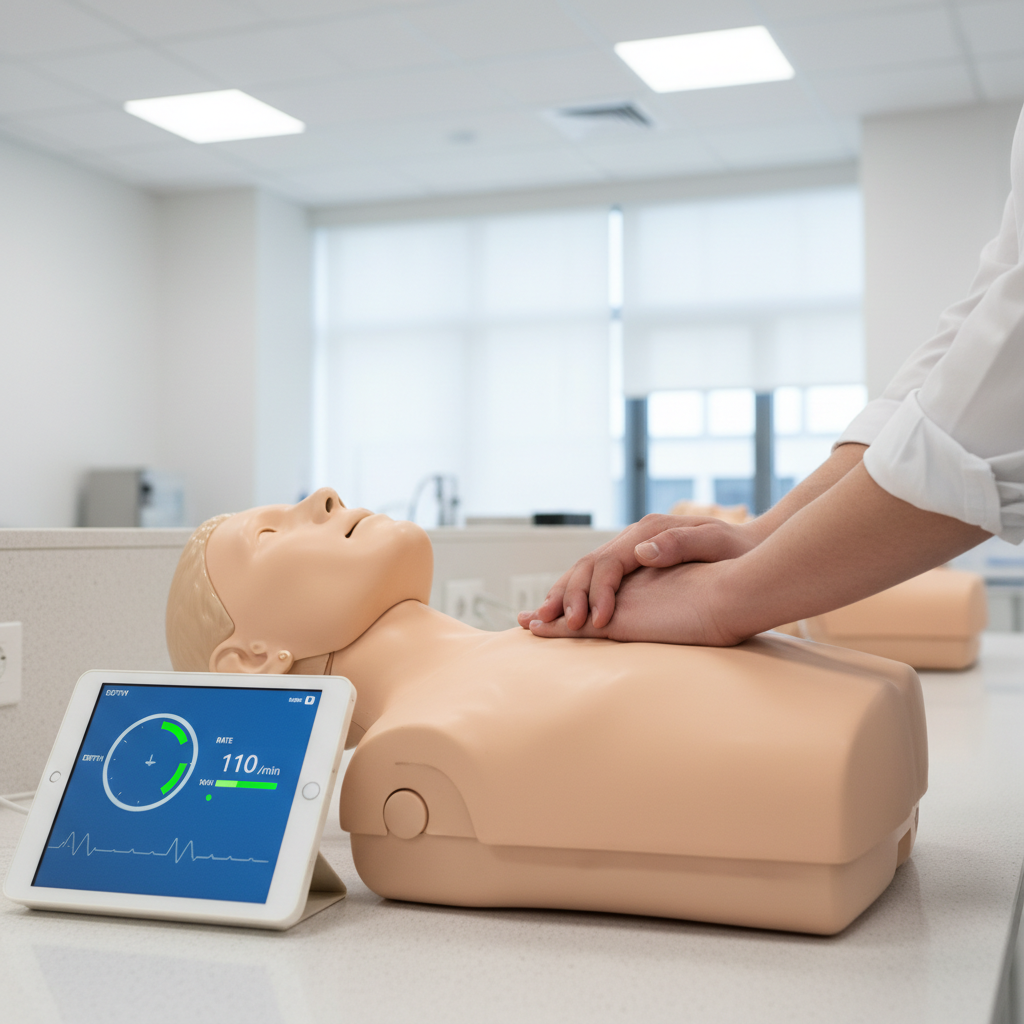
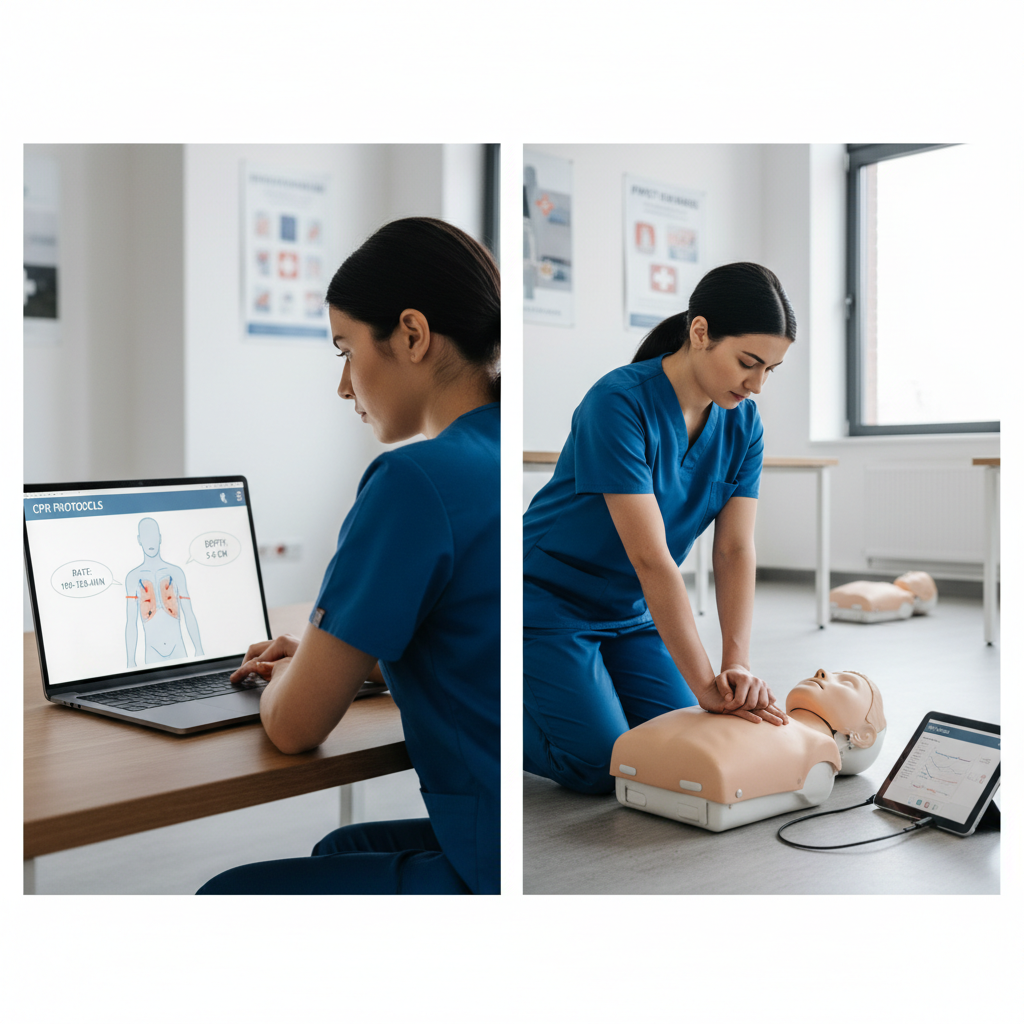
This is the legitimate way to use the internet for your certification. You complete the high-quality cognitive portion (videos and quizzes) online at your own pace. Then, you attend a brief in-person "skills session" to prove you can actually perform high-quality chest compressions and use an AED.
RQI vs. Traditional CPR Training dives deeper into how automated technology is making this process even faster and more efficient.
Why Most Employers Reject Online-Only CPR Cards
If you work in healthcare, education, construction, or childcare, your employer is likely bound by state regulations or OSHA (Occupational Safety and Health Administration) requirements.
OSHA’s position is clear: online-only training is insufficient because it lacks the "hands-on" component necessary to ensure an individual can physically perform CPR. If you buy a 100% online card, you risk:
* Rejected Employment: Hospitals and clinics will almost never accept an online-only BLS card.
* Liability Issues: If an emergency occurs and it’s discovered your training wasn't compliant with national standards, your employer could face legal repercussions.
* Wasted Money: You will likely end up paying twice—once for the fake card and again for a real BLS or Heartsaver course.
Red Flags: How to Spot a "Fake" CPR Site
Before you enter your credit card information, look for these warning signs that a site is a "certificate mill":
The Role of 2025 ILCOR and AHA Guidelines
Legitimate training programs follow the guidelines set by the International Liaison Committee on Resuscitation (ILCOR). These standards are updated frequently to reflect the latest science in cardiac arrest survival. For instance, the new 2025 ILCOR Guidelines emphasize the precision of compression depth and rate—something that is impossible to assess through a computer screen alone.
How to Choose the Right Version of Online Training
If you want the convenience of online learning without the risk of a fake certification, follow these steps:
* Choose the Right Certification Level: Are you a nurse? You need Basic Life Support (BLS). Are you a coach or office worker? BLS vs. Heartsaver can help you decide.
* Verify the Provider: Look for courses directly from the AHA, Red Cross, or Health & Safety Institute (HSI).
* Schedule a Skills Session: Once you finish the online modules, use CPR Search to find a local instructor who can verify your skills in person.
Summary: Is it Worth it?
In short: Blended learning is legit; online-only is risky.
Don't let the convenience of a 100% online course leave you unprepared in a real emergency. High-quality CPR saves lives, but only when it is performed correctly. If you are a business owner looking to certify your team correctly, consider corporate training solutions where instructors come to you.
Ready to get certified the right way?
Find CPR Classes Near You | Browse CPR Classes Directory | Visit Our Blog
Ready to Get CPR Certified?
Find certified CPR training providers near you.
Find CPR Classes Near You