BLS Skills Session 2025: How to Master the Hands-On Checkoff
Ready to get certified? Learn what to expect in a BLS or Heartsaver skills session and how to pass your hands-on checkoff with confidence.
BLS Skills Session 2025: How to Master the Hands-On Checkoff
You’ve finished your online modules, watched the instructional videos, and aced the quiz. But there is one final hurdle between you and your provider card: the skills session. Whether you are pursuing a Basic Life Support (BLS) certification for healthcare or a Heartsaver certification for the general public, the "hands-on" portion is where the real learning happens—and where many students feel the most pressure.
In 2025, the standards for high-quality CPR are higher than ever. With the integration of real-time feedback technology and the New 2025 ILCOR Guidelines, performing compressions isn't just about "pushing hard and fast." It’s about precision.
At CPR Search, we help thousands of professionals Find CPR Classes Near You. In this guide, we’ll break down exactly what happens during a BLS skills session and how you can pass your checkoff on the first try.
What Exactly is a CPR Skills Session?
A skills session (sometimes called a "Part 2" or "Skills Check") is the practical component of a blended learning course. While classroom-only courses still exist, the majority of healthcare providers now opt for the blended format to save time.
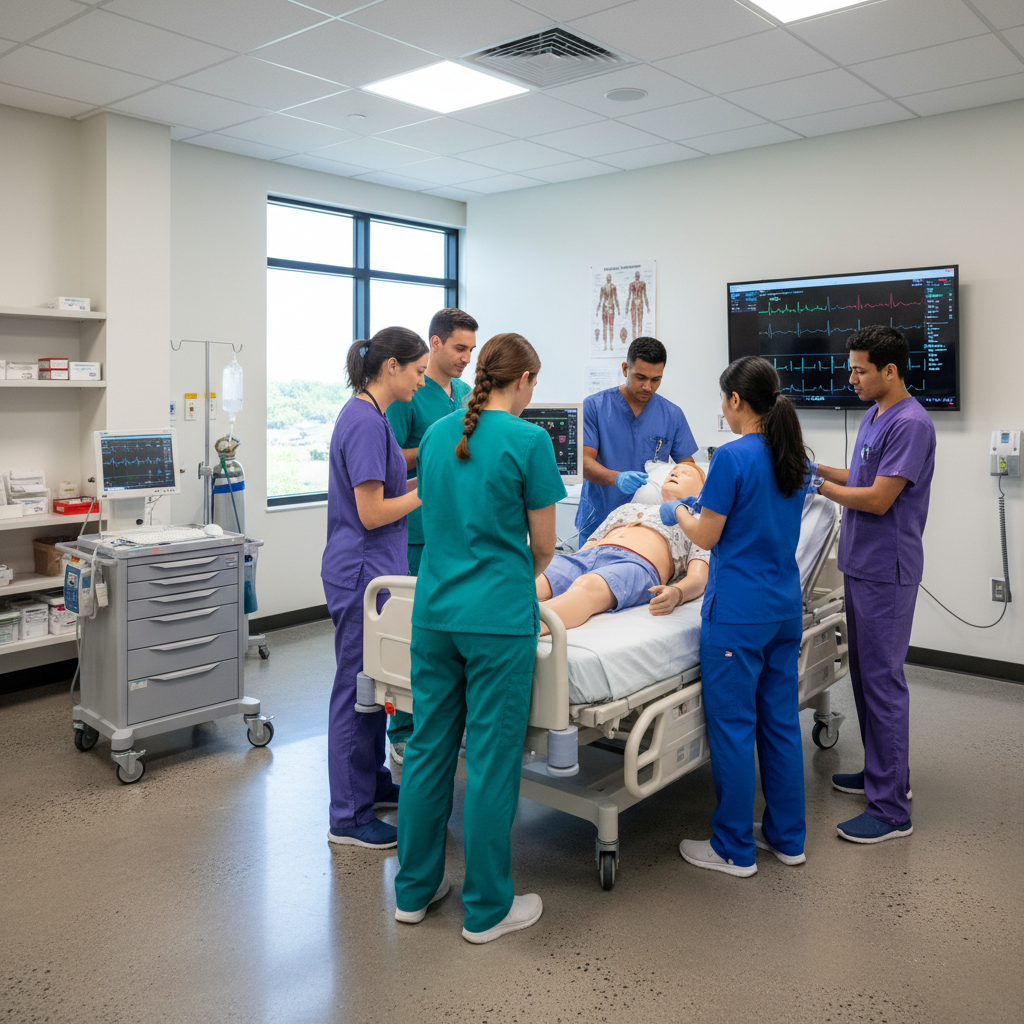
During a skills session, you will meet with a certified American Heart Association (AHA) or Red Cross instructor. Your goal is to demonstrate that you can perform life-saving techniques on a manikin according to current clinical standards. This usually includes:
* Adult/Child/Infant CPR: High-quality chest compressions and rescue breaths.
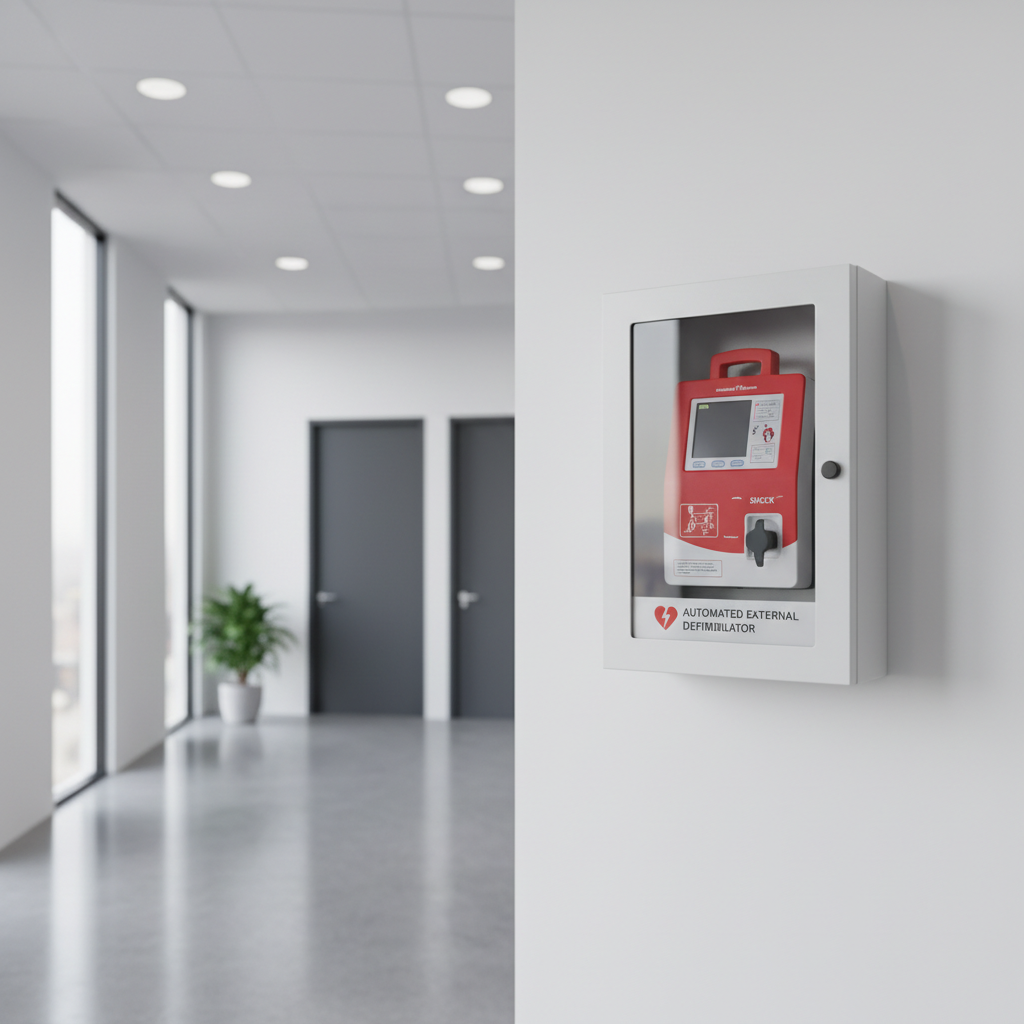
* AED Operation: Safely and quickly using an Automated External Defibrillator.
* Bag-Mask Ventilation: Using a BVM (Bag-Valve Mask) for one- and two-rescuer scenarios.
* Choking Relief: Managing obstructed airways in conscious and unconscious victims.
If you are wondering if this hands-on portion is mandatory, the answer is a resounding yes. If a program claims to be fully online with no manikin practice, it is likely not OSHA-compliant. To learn more, read our post: Is Online CPR Training Legit? What You Need to Know Before Buying.
The Anatomy of a Successful Skills Checkoff
When you walk into the training center, the instructor isn't looking for perfection in your personality; they are looking for adherence to the "Critical Skills Descriptors." Here is what you need to master:
1. Compression Depth and Rate
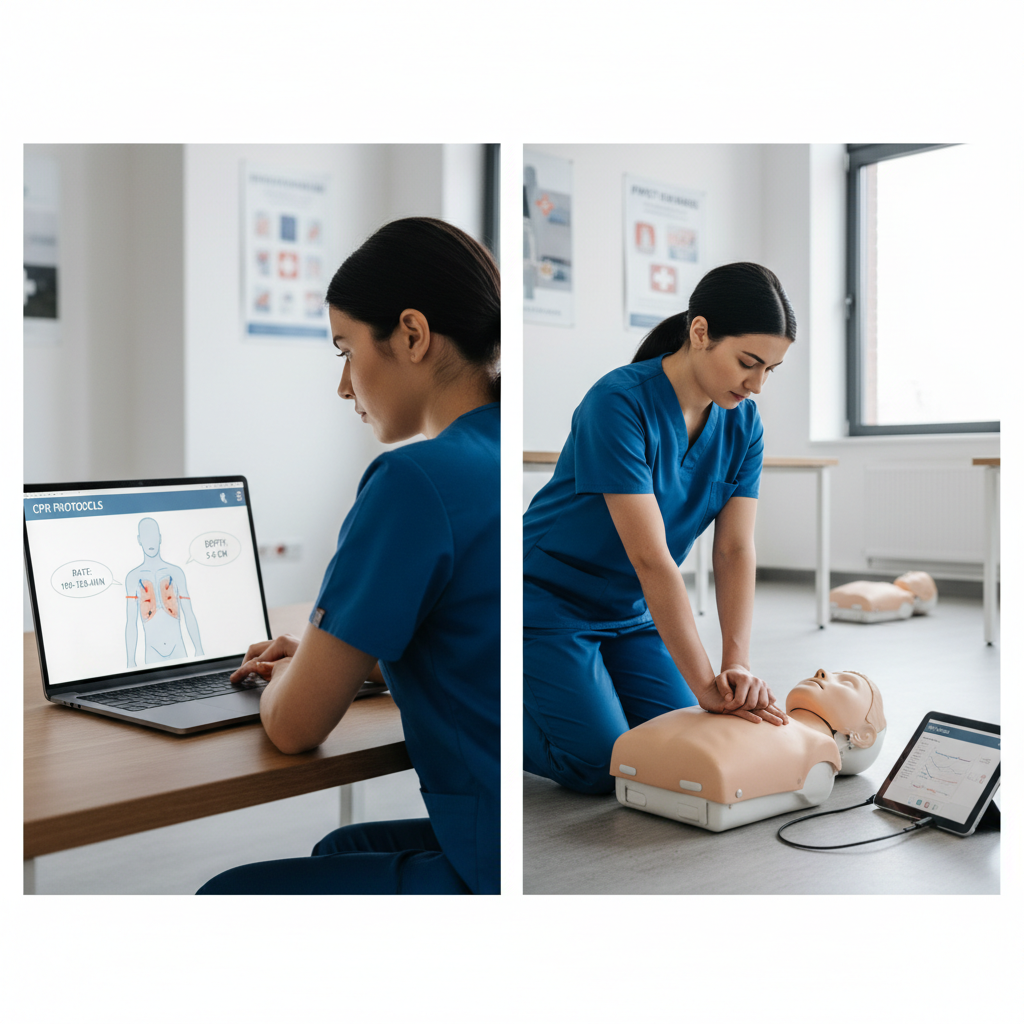
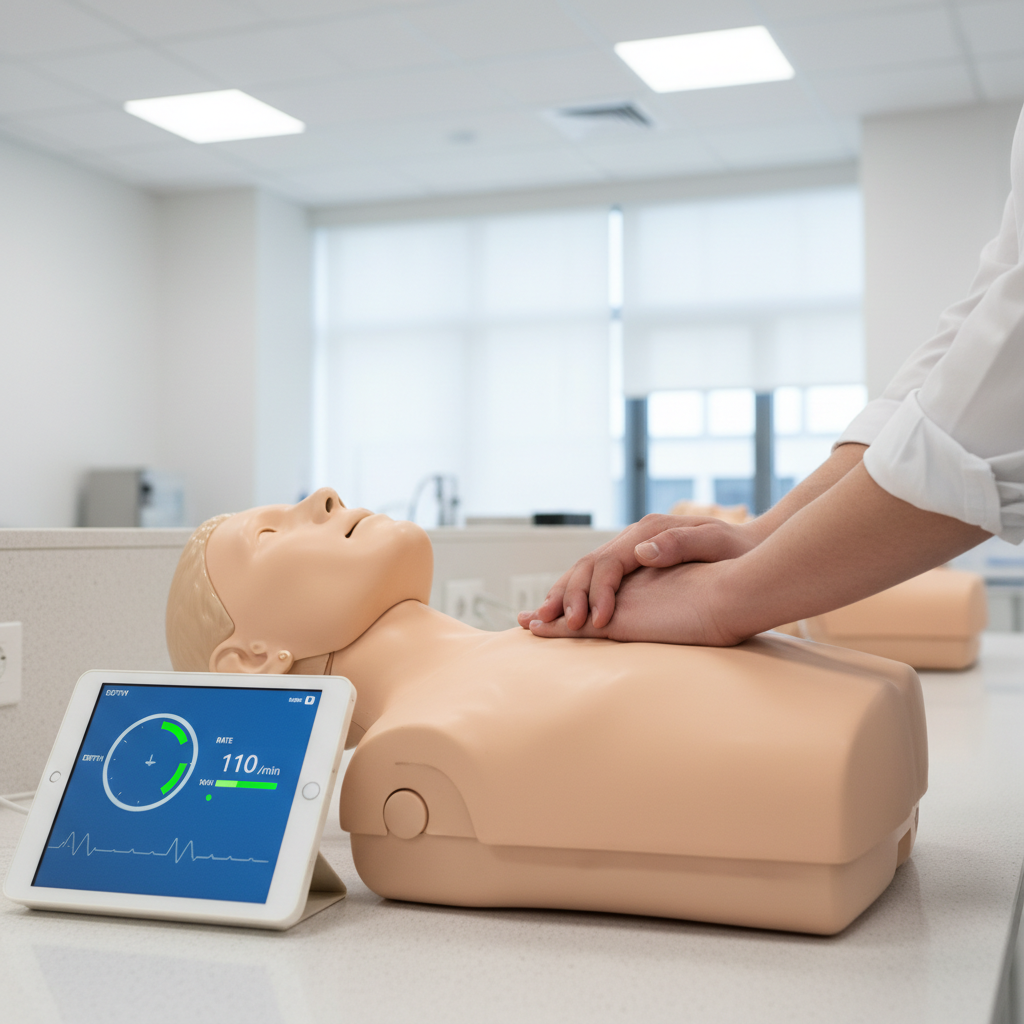
For adults, you must compress at least 2 inches (but no more than 2.4 inches) deep. The rate must be between 100 and 120 beats per minute (BPM). Many instructors use manikins equipped with RQI technology or light-up feedback devices to measure this in real-time. For more on how these devices work, see RQI vs. Traditional CPR Training.
2. Full Chest Recoil
This is the most common mistake. Between every compression, you must allow the chest to return to its natural position completely. If you lean on the chest, blood cannot properly refill the heart, making your efforts less effective.
3. Effective Ventilations
When using a pocket mask or BVM, you must see a visible chest rise. If the chest doesn’t rise, you need to adjust the head-tilt/chin-lift and ensure a proper seal. In a BLS checkoff, you’ll also be tested on the two-rescuer technique, where one person maintains the seal while the other squeezes the bag.
BLS vs. Heartsaver: Different Scenarios, Different Skills
It is vital to show up for the right type of session.
* BLS (Basic Life Support): Required for nurses, doctors, EMTs, and dental professionals. It includes two-rescuer cycles and advanced airway support.
* Heartsaver: Intended for lay-responders like teachers, coaches, and fitness instructors. The testing is less clinical and focuses more on the basics of AED use and single-rescuer CPR.
Confused about which one you need? Check out our deep dive: BLS vs. Heartsaver: Choosing the Right CPR Certification in 2026.
3 Tips to Pass Your Skills Session with Confidence
Statistics: Why Hands-On Matters
Recent data from the American Heart Association shows that high-quality CPR can double or even triple a victim's chance of survival after cardiac arrest. However, studies show that CPR skills begin to degrade as soon as three months after training. This is why the hands-on checkoff is so critical—it builds the muscle memory required to act when every second counts.
Closing the Loop: Getting Your Card
Once you pass your skills session, your instructor will issue your eCard. If you’ve completed your training through a major national provider, you can usually access your certification within 24 hours. For a step-by-step walkthrough, see How to Claim Your CPR Card: AHA and Red Cross Guide.
For business owners looking to train an entire team at once, our Corporate Training page offers solutions for on-site skills checkoffs that come to your office.
Find a Local Skills Session Today
Don't let your online certificate gather dust. Complete the final step of your certification by finding a high-quality training center near you. Whether you need a healthcare-level BLS checkoff or a basic first aid class, we have you covered.
Ready to get started?
* Browse CPR Classes Directory
* Find CPR Classes Near You
* Visit Our Blog for more training tips.
Ready to Get CPR Certified?
Find certified CPR training providers near you.
Find CPR Classes Near You